What Are Local Citations (and Why They Make or Break Your Local Rankings)
Local citations are one of the most overlooked ranking factors in local SEO. Learn why NAP consistency matters, and how to build a citation strategy that scales without burning hundreds of hours on manual data entry.
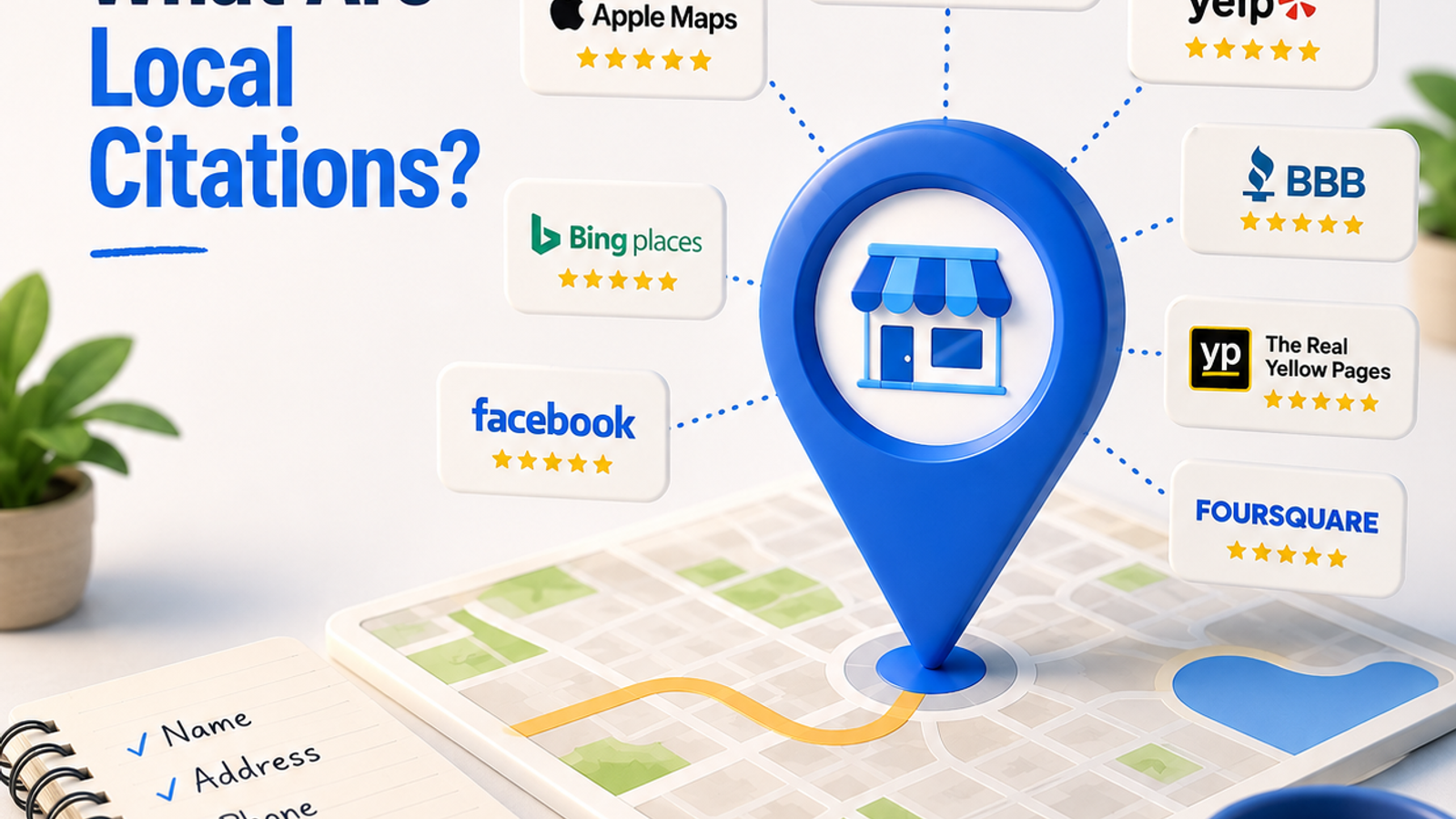
If you've ever searched for "plumber near me" or "best dentist in Austin," you've interacted with local search. And behind every business that shows up in that local pack is a web of local citations working quietly in the background.
Yet most business owners — and even some marketing agencies — treat citations as an afterthought. A Yelp listing here, a Yellow Pages entry there, maybe a Google Business Profile if someone remembers to claim it.
That's a missed opportunity. In this guide, we'll break down exactly what local citations are, why they matter more than most people realize, and how to build them at scale without losing your mind to spreadsheets.
What Is a Local Citation?
A local citation is any online mention of a business's Name, Address, and Phone number — commonly known as NAP. Citations can appear on business directories, social media platforms, review sites, industry-specific portals, local chamber of commerce pages, and even news articles.
Citations come in two forms:
- Structured citations — formal business listings on directories like Yelp, Yellow Pages, BBB, Foursquare, or Apple Maps. These have dedicated fields for name, address, phone, website, hours, and categories.
- Unstructured citations — mentions of your business NAP in blog posts, news articles, press releases, or event listings. There's no standard format; the data is embedded in the page content.
Both types send signals to search engines about your business's legitimacy, location, and relevance.
Why Do Local Citations Matter?
Google's local ranking algorithm weighs three primary factors: relevance, distance, and prominence. Citations directly influence prominence — the measure of how well-known and trustworthy your business is across the web.
Here's why citations move the needle:
1. They validate your business exists
Every consistent citation is a vote of confidence. When Google sees the same NAP data repeated across dozens of trusted sources, it gains confidence that your business is real, active, and located where you say it is.
2. They improve local pack visibility
Businesses with a higher volume of accurate citations tend to rank higher in the local 3-pack — the map results that appear at the top of local search queries. According to multiple local SEO studies, citation signals still account for a meaningful portion of local pack ranking factors.
3. They drive direct traffic
Many directory sites rank independently for local keywords. When your business is listed on a directory that ranks for "electricians in Denver," you're getting visibility even beyond Google's main results. These listings become secondary traffic sources.
4. They compound over time
Unlike paid ads that stop working the moment you stop paying, citations persist. A listing on Yelp, BBB, or a local chamber site can continue driving traffic and reinforcing your local authority for years.
The NAP Consistency Problem
Here's where most businesses stumble. Having 200 citations sounds impressive — until half of them show your old phone number, your previous address, or a misspelled business name.
NAP inconsistency is one of the fastest ways to confuse search engines and erode your local rankings.
Common causes of inconsistency:
- The business moved locations but never updated old listings
- A phone number changed, and only Google Business Profile was updated
- Different employees submitted listings at different times with slight variations ("St." vs. "Street," "LLC" vs. no LLC)
- Aggregator sites distributed outdated data
Google's algorithm treats inconsistent NAP data as a trust signal — a negative one. If your address is different on Yelp than it is on your website, Google has less confidence about where you actually are. That ambiguity can push you down in local results.
The fix is straightforward but labor-intensive: audit every existing citation, correct the inaccurate ones, and ensure every new citation uses the exact same NAP format.
Which Directories Actually Matter?
Not all directories are created equal. A listing on a well-maintained, category-relevant directory with high domain authority is worth significantly more than a listing on a low-quality, spammy link farm.
Here's a practical framework for prioritizing directories:
Tier 1: The essentials
These are the directories every local business should be listed on, regardless of industry:
- Google Business Profile
- Apple Maps / Apple Business Connect
- Bing Places
- Yelp
- Facebook Business
- Better Business Bureau (BBB)
- Yellow Pages / YP.com
- Foursquare
Tier 2: Industry-specific directories
These are niche directories that serve a specific vertical. They carry extra weight because they signal category relevance:
- Legal: Avvo, FindLaw, Justia
- Home services: Houzz, Angi, HomeAdvisor, Porch
- Healthcare: Healthgrades, Zocdoc, Vitals, WebMD
- Restaurants: TripAdvisor, OpenTable, Zomato
- Real estate: Zillow, Realtor.com, Trulia
Tier 3: Local and regional directories
City-specific, county-level, and state-level directories. These are underrated because they provide strong geo-relevance signals:
- Local chamber of commerce sites
- City-specific business directories
- State association directories
- Regional news outlet business listings
Tier 4: General aggregators and data providers
These feed data downstream to other directories. Getting listed here can cascade your NAP data across the ecosystem:
- Data Axle (formerly Infogroup)
- Localeze / Neustar
- Factual (now part of Foursquare)
How Many Citations Do You Actually Need?
There's no magic number, but research patterns are clear:
- Businesses in the local 3-pack typically have more citations than competitors who don't appear there.
- Quality and consistency matter more than raw volume. 80 accurate citations will outperform 300 inconsistent ones.
- The optimal number depends on your market's competitiveness. A plumber in a small town might need 40–60 citations. A personal injury lawyer in Los Angeles might need 200+ just to stay competitive.
A good starting strategy:
- Cover the essentials (Tier 1) — 8–10 directories
- Add your niche directories (Tier 2) — 10–30 depending on industry
- Layer in local directories (Tier 3) — 15–40 depending on location
- Build from there — general directories, aggregators, and emerging platforms
The Manual Citation Problem
Here's the uncomfortable truth: building citations manually is brutally slow.
Each directory has its own submission process. Some require email verification. Some require phone verification. Some have multi-step forms with 20+ fields. Some take days or weeks to review and approve your listing.
For a single business targeting 150 directories, you're looking at:
- 150+ unique submission forms
- Dozens of verification emails to manage
- Hours of copy-pasting the same NAP data
- Weeks of follow-up to confirm listings went live
Multiply that by 5, 10, or 50 client businesses, and you have a full-time job — or a team of full-time jobs — that produces no strategic value beyond the listing itself.
This is exactly why citation building became one of the first local SEO tasks to be automated.
A Better Approach: AI-Powered Citation Building
Modern citation building doesn't require manually filling out forms one directory at a time.
Here's what a modern workflow looks like:
- Audit your current citations. Scan the web to find where your business is already listed and flag any NAP inconsistencies. A good audit covers general directories, niche sites, maps, review platforms, and social media.
- Discover the right directories. Instead of guessing which directories to target, use intelligent discovery that considers your business category, location, and the directories where competitors are listed. The best systems combine a curated catalog of known-good directories with AI-powered discovery that surfaces niche and local directories you'd never find manually.
- Automate the submissions. AI agents can fill out directory submission forms, handle multi-step workflows, and manage verification processes. For directories that require human judgment — CAPTCHAs, phone calls, or payment — a trained fulfillment team steps in.
- Monitor and maintain. Citation building isn't a one-time project. Directories change, listings get modified by third parties, and your own business information evolves. Ongoing monitoring ensures your citation profile stays accurate.
Getting Started With Your Citation Strategy
Whether you're a local business owner or an agency managing multiple locations, here's how to start:
Step 1: Get a citation audit. Before building new citations, understand where you stand. How many citations do you have? Are they consistent? Where are the gaps?
Step 2: Complete your business profile. Make sure you have a canonical, authoritative version of your business data — name, address, phone, website, hours, categories, descriptions, services, social links, and media. This becomes the source of truth for every submission.
Step 3: Prioritize your directories. Don't try to submit everywhere at once. Start with the essentials and your industry's top niche directories. Layer in local directories next.
Step 4: Build, verify, and track. Submit to directories, manage the verification process, and track which listings go live. Use a system that gives you visibility into progress without burying you in operational noise.
Step 5: Maintain consistency. Whenever your business changes its phone number, address, hours, or website, update your citations. Otherwise, you'll slowly drift back into inconsistency.
The Bottom Line
Local citations aren't glamorous. They don't go viral. They won't win any design awards.
But they are one of the most reliable, compounding investments you can make in local SEO. A consistent, comprehensive citation profile tells search engines — and potential customers — that your business is real, trustworthy, and relevant to the searches happening in your area.
The businesses that win in local search are the ones that treat citation building as infrastructure, not a checkbox. Build the foundation right, maintain it over time, and let it compound.
BuildCitations.ai helps businesses and agencies build local SEO citations across 600+ directories using AI automation and expert fulfillment. Start with a free citation audit → here